
Robert Spencer

|

Pamela Geller

|

Bat Ye'or

|

Brigitte Gabriel

|

Daniel Pipes

|

Debbie Schlussel

|

Walid Shoebat

|

Joe Kaufman

|

Wafa Sultan

|

Geert Wilders

|

The Nuclear Card

Tag Archive | "Tariq Ramadan"

Tags: , , , , , , , , , , , , , , , , , ,

Exclusive: LoonWatch Interview with Haroon Moghul

Posted on 19 December 2012 by Garibaldi

Haroon_Moghul

by Garibaldi

A little over a week ago I had the privilege to converse with writer and intellectual Haroon Moghul, who is currently in between writing several books (I won’t give away any spoilers) and completing his PhD dissertation!

Moghul is a unique voice who early on challenged Islamophobia while also providing nuanced insight and perspective relating to Islamic issues and Muslim identity, for which he earned his rightful place in the ranks of the anti-Loons.

A brief bio:

Haroon Moghul is a Fellow at New America Foundation and a Ph.D. candidate in Columbia University’s Department of Middle East, South Asian and African Studies. His research focus is colonial India, and specifically Muhammad Iqbal’s project of reconstructing religious thought in Islam.

Haroon is the Fellow in Muslim Politics and Societies at the Center on National Security at Fordham Law School and is on the Board of the Multicultural Audience Development Initiative at New York’s Metropolitan Museum of Art. He holds an M.A. in Middle East and South Asian Studies from Columbia University.

Haroon is an Associate Editor and columnist at Religion Dispatches; his writing has also been featured on al-Jazeera, Foreign Policy, and The Huffington Post. In his novel, “The Order of Light” (Penguin 2006), young Muslims light themselves on fire to protest the authoritarian reality of the Middle East, an eerie forecasting of recent events.

As you can expect, Moghul’s background, fields of study and writings sparked our curiosity. You will find that the deep introspection which he provides to intrinsic questions about the relationship between “the West and the East” will be of immense benefit and critical importance.

We touched upon Moghul’s: loss and return to faith in God, the place of doubt in Islam, literature, what exactly is a “Muslim reformer,” the phenomenon of “ex-Muslims and ex-terrorists” in relation to Islamophobia, Jesus and carpet bombing, a possible shisha pow-wow with Kamal Saleem, the Arab uprisings, Saudi Arabia and why he may never be able to do Hajj (pilgrimage), and the famous early 20th century Indian Muslim poet Muhammad Iqbal.

Fair warning: The interview is long but very, very much worth the read.

Interview with Haroon Moghul:

Garibaldi of LoonwatchI was intrigued by your bio, where we read that you left Islam and became an Atheist. In my conversation with Reza Aslan he described his conversion to Evangelicalism as “emotional” and his conversion to Islam as being “rational.” At one point you became an atheist…

Haroon Moghul: Yeah, there was a period in my life where I didn’t believe in God.

LW: An AltMuslimah book review discussed a book that you were featured in titled “All-American: 45 American Men on Being Muslim.” The book review described you as,

“displaying a raw honesty about the difficulties of Islam’s central command, to believe in God – how a totalitarian commitment to the ‘endless tasks assigned by Islam’ left you “crumpled in otherworldly exhaustion,’ before you found yourself able to accept Islam as a long term journey marked by balance.”

I’m hoping you can say a little more about this journey for those who don’t have access to the book. Why did you become an atheist and what does it mean to be “crumpled in otherworldly exhaustion”?

HM: The way I was taught Islam was as a checklist religion. There were things that you had to do on a daily basis, on an annual basis, on a life-time basis and the way in which those things were presented to me, the way in which I understood them, was like marking items off a list. Pray five times a day, fast during Ramadan, go to Mecca for Hajj and the result was looking at life as some type of calculation: “I do so many things in this column, I don’t do so many things in that column” and the effect of it for me was exhausting.

Intellectually it was very unsatisfying, emotionally it was deadening and spiritually it felt profoundly meaningless.  It seemed like going through the numbers for the sake of going through the numbers and when you added up the numbers after you died that’s where you ended up. And because I was someone who found it very hard to fulfill even the most basic of those commandments, it seemed I was Sisyphus constantly trying to push a rock up a hill; eventually the rock would roll down on me and crush me and I would have to try to do it all over again.

So I would have these bursts of Islam, when every few months I would feel so spiritually moved that I would connect to the religion and jump into it and go all in and then drop out, and I would come out the other side feeling incredibly worn down. The more often that happened over the years the more I felt that this was an impossible task. You keep trying and if you never make it then what’s the point?

When I finally came around, it was to this idea that Islam is a journey, and I still believe that, it’s an attempt to get closer to God and many times we make huge mistakes and we end up farther away than where we started and the point simply is that you are trying to get there (closer to God).

This point was illuminated to me by a friend who pointed out that the whole idea of Islam is turning back to God and having that relationship with God. It’s this constant idea of turning back. You wouldn’t have to turn back if you didn’t screw up and the fact is that as human beings we screw up and I screw up more than most. It’s that returning and the fact that you can and should return that is Islam in its essence. It’s not a checklist, it’s about building a relationship.

LW: That sounds at least partially like a very wrenching experience, filled with existential pain, and your return to Islam was in juxtaposition to Reza’s who when we interviewed him told us that he felt an excitement about Islam, and also that he had what he described as a “rational experience.” In your return there is more emphasis on the spiritual, not saying that his wasn’t but you’re describing something that is touched a little more with the luminosity of spirituality.

HM: I grew up in a really religious household, a really religiously conservative house, in a very orthodox Sunni community you could say and intellectually that always made sense to me. I understood and believed and reproduced the arguments for Sunni orthodoxy, though they never moved me spiritually or emotionally, and so there was this massive disconnect.

When I was 21, I went to Egypt to study Arabic, retracing the footsteps of people in my community and in my family who’d made their journey to Egypt to study Arabic and Islam.  But I went there and I realized that the last thing I wanted to do was be in the mosque.  But there was something about Islam in Egypt that compelled and impacted me very differently from the way in which people had practiced Islam around me and that set in motion this profound and painful process where I realized that I wasn’t who I thought I was.

I remember reading people like Naguib Mahfouz, the Egyptian Nobel Prize winning author, and I was astonished at how he was able to bring Islam and belief in God very casually and very non-intrusively into his ideas and that’s always something that appealed to and intrigued me.

I’m going to be a dork here and reference Lord of the Rings but on reading Tolkien what is fascinating is that this deeply religious Catholic never mentions his Catholicism in his many books, but you can’t make sense of them unless you understand that he is a Christian. I think it’s that kind of religiosity that becomes almost implicit, that was compelling and beautiful to me and that’s something I found attractive in Egypt when I found it. That’s one of the reasons why I enjoy traveling so much because we find ways of living religion that are more moving and compelling.

Ultimately for me there was an emotional component and it comes down to the Prophet Muhammad, peace and blessings be upon him, because I realized after a little while that if I was an atheist, then the Prophet Muhammad was deluded or deceptive or something – but he wasn’t who he said he was and that to me was something I couldn’t accept and so I had this really weird, I don’t know what you want to call it, “atheism coupled with a belief in the Prophet Muhammad.”

I had to somehow make sense of that and so it was more of an emotional identification with the Prophet Muhammad, peace be upon him, that brought me back around to the idea of God.

LW: That’s very interesting. So you were at some stage a “believing Atheist?”

HM: Yeah in a way. I think sometimes we really badly want things to fit into a box but it makes perhaps more sense for these things to be processes that we go through and there are, and you mentioned rationality, there are all these things that make us who we are.

My belief in God and the Prophet Muhammad isn’t solely rational, there is a rational component there but a lot of it has to do with history, family, identity, emotion, spirituality, beauty and literature and all these things that combine together to make something compelling to us, something that becomes who we are or we become what that is.

I found the check-list version of Islam deeply alienating and profoundly unfulfilling and the challenge has been to have the confidence to say this doesn’t work for me, I need to find something that works for me and makes sense to me but it has to be reasonable enough, I won’t use the word rational because that could be alienating to people, but it has to be reasonable enough that I can share it with someone else, so that it can make sense to someone else. It doesn’t necessarily have to move them but it has to be something that makes sense to them because otherwise a faith that is so purely individualistic becomes meaningless. We are social creatures and if we can’t share our emotions and feelings and preferences then those things are going to disappear.  If you force a human being to choose between individuality and social identity, individuality will always fade.

Now I’m going in a different direction but that was something that I needed to come to terms with: “How does Islam make sense to me but also provide something compelling enough to share with others and get from others?”  We always require that kind of reflection and support and back and forth engagement that allows us to keep going when we stumble or when we feel weak or when we feel lost in some sort of way.

LW: Something in what you went through has a philosophical component in the sense that it relates to the place of doubt in Islam. Before I get to that let me ask you if you would describe yourself as a Muslim reformer?

HM: That’s an incredibly loaded question.

[laughter]

HM: That’s the kind of question I always get. There’s always that one person in the audience who has only read certain far-right websites on Islam and they will ask questions like, “Are you a Muslim secularist?” And you’re kind of like what the heck does that mean?

I’d say I am someone who wants us to be engaged with the foundations of Islam in an intelligent, creative and compassionate way, and I do think that is fundamentally what Islam wants us to do.  If the Quran and the Prophet are for every people in every time then those things have to be engaged with based on where and who we are and if we’re just inheriting something then we aren’t engaging Islam and I think that is fundamentally an un-Islamic concept.

The idea of reform is not alien to Islam. I think that an Islam that is not open to letting in fresh air is not really Islam. It pretends to be Islam, it masquerades as Islam, it takes the name of Islam and even acts in the name of Islam but it isn’t Islam.

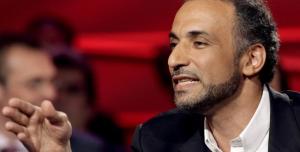
Tariq-ramadan-

LWWhat I was going to ask you relating to this is that your story provides space for a perhaps contentious or even misunderstood subject regarding the place of doubt in Islam. Some Muslim intellectuals such as Tariq Ramadan in his book “Islam, the West and the Challenges of Modernity” discuss doubt in terms of cultural divergence.

Ramadan essentially says that the experience of faith in Islam is not of a similar nature as the so-called “Western” concept that “doubt is the trial of fire necessary to any real faith.” Ramadan says,

“We can find many Muslims who acknowledge not practicing their religion as they should, but very few are those who assert not believing at all. God’s existence is almost never doubted; this seems to be a natural daily given fact of men and women…it is a question of cultural divergences; over here meaning was given to doubt; over there meaning is in the reminder.”

I found this very intriguing as a concept in that Ramadan is not saying this as an absolute, but rather is speaking in generalities, that what is “audible” in one cultural context is not in another. You have “Western Muslims” who are growing up in a context in which doubt is a major component of religious life and experience of faith, and it might touch on some of the subjects we were talking about in the sense that it can “let in fresh air” maybe, do you see it that way?

HM: For me I think that the intellectual exploration of Islam is profoundly meaningful and valuable but it is not something that the majority of people will ever really engage in or want to engage in or need to engage in and this is something that took me some time to come to terms with.

In part it comes from my study of philosophy. I was a philosophy major for my undergrad; I used to read a lot of philosophy and I continue to read a lot of philosophy for my doctorate and philosophy is great, don’t get me wrong, but what you realize at a certain point is that you have these incredibly intelligent men and women, mostly men in the Western tradition, and often times they disagree with each other completely so there’s no real clarity of view that emerges from merely studying philosophy.

That kind of engagement with philosophy and thought is important but for Muslims in the West, and especially in the United States, our religious life will be a collective community life or it will be nothing at all.

For many people the intellectual exploration of Islam is irrelevant or impossible: They simply do not have access to the sources, they don’t have the time or the energy, and they don’t have the desire. They are going to get Islam from an experience that is part of family, community and culture, that’s where the future of Islam lies, in those things, not in textual analysis, and family, community, and culture have to create space for doubt, for wrestling with religious ideas, and dealing with the kind of questions that are going to come up.

And I think one of the most interesting things that we have to be prepared for is that religion has always been reflected by where you are and one of the most amazing things about the United States is its ability to assimilate people into pre-existing norms and ideas.

So religion in America succeeds basically if it becomes Protestant, right, so you have JFK’s famous speech where he basically says, “As President, I am not going to listen to the Pope.” What he is saying is that my Catholicism is no different than your Protestant faith. You can trust Catholics because we are just like Protestants and basically every religious community in the USA goes through that and we are not going to be any different.

We’d be delusional if we imagined that somehow American Islam is going to be different and so what we have to be prepared for as a community is that the kinds of doubts we’re going to have about Islam amongst individuals are going to be by-and-large the same doubts that Jews and Christians and Mormons and Hindus in the USA will have.

Basically that means Islam in America will be very Protestant, it will be about interior faith, it will be about states of the heart as opposed to actions you do externally and there is room for doubt in that sense, of course there is, that is just human reality – but it’s also the fact that when you live in a society where beliefs are questioned and interrogated and doubted and even dismissed you’re going to see more of that amongst Muslims because essentially we take on where we are.

Umar Farooq Abdullah has this saying, that “Islam is like a river and it takes on the color of whatever it passes through,” so we’re going to take on whatever we pass or are passing through and we can’t be separated from that context.  So the kind of doubts we are going to see amongst Muslims are the same kind of doubts we see among other groups in the US.

I can give a real quick example of this; a guy came up to me after a lecture I gave and said that he really doesn’t see the purpose of religion and all the criticisms he gave of Islam clearly emerged from the kind of common Christopher Hitchens or Richard Dawkins-type criticisms of religion, which have nothing to do with Islam. It was clear that he didn’t really understand Islam, he was simply applying to Islam the kind of critiques of religion he had heard elsewhere: “If Islam is about making people better why was the Prophet so rich and wealthy?” well he wasn’t rich and wealthy and he was like “oh, I didn’t know that.”  What I’m saying is that the doubts themselves are not just spontaneously emerging, they are also doubts that mimic from the doubts we hear around us.

I don’t know if I answered your question?

LWNo, I think you did!

HM: I think you hit on something really interesting and someone said this to me recently, this is really profound: “In Islam we attempt to realize spiritual states through physical action so even if prayer doesn’t seem to do anything for you, you just keep praying.” So it’s like you’re going to the gym for a few months. It might really suck and really hurt and you might be miserable but eventually you find that it brings you something positive and good and you find you can’t live without it and eventually you become fundamentally changed because of it.

I think religion is very similar in that way. At an Islamic Relief fundraiser I was at, someone said, “give a little money everyday against your self and your lower inclinations and it eventually becomes a habit and eventually becomes something you like to do and eventually becomes something you can’t do without.” Islam does accept doubt, and I think it’s not perhaps framed in a way we are used to framing doubt – but why would we have a spiritual tradition that tells you to do it even if you don’t feel like doing it?

That’s doubt, saying “I don’t want to do this but I’m going to do it and eventually it will do something for me,” and that’s maybe where the check-list version of religion was communicated to me in a really bad way or a really judgmental way as opposed to as a journey, in which you are trying make yourself into a better person, and these are the tools that you use, but the tools are not the point, they are simply to get you from point A to point B. Sometimes you get stuck on point A but you’re still trying and I think that’s where doubt is in Islam and the space for doubt.

LW: Our readers are going to have a lot to unpack here. This is a topic that certainly will be the subject of only increasing conversation as time goes by and this is a good place, since we are talking about the boundaries of “ex-Muslims” and “Muslim reformers,” a good place to segway to a topic we cover often, “Islamophobia” and “anti-Muslim bigotry.” Two terms that even now are being contested as either contradictory or in need of being challenged or wiped out of the English language.

We recently had an exchange on our site, or between site commenters in which ex-Muslims from the CEMB, which is led by Iranian expat and Worker’s Communist Party of Iran member Maryam Namazie who has been accused of links to questionable individuals and organizations and has written things like,

“‘My Hijab, My Right’ is like saying ‘My FGM (Female Genital Mutilation), My Right’!!! The veil is an instrument to control a woman’s sexuality, like FGM…. Today, more than ever before, the veil is political Islam’s symbol…. The veil is not just another piece of clothing – just as FGM is not just another custom. I suppose if it were to be compared with anyone’s clothing it would be comparable to the Star of David pinned on Jews by the Nazis to segregate, control, repress and to commit genocide.”

The exchange took place on an article by former Muslim As’ad Abukhalil (i.e. Angry Arab)…

HM: Yeah, sure.

Atheism

The image used in the Economist Article (David Parkins).

LWTitled “On Ex-Muslims” that critiqued the Economist article regarding Atheism and Islam… 

HM: Yes, I saw it; it was a really good critique.

LWWhat are your thoughts on the article and maybe such organizations? You don’t hear about Councils of Ex-Christians, Ex-Jews or Ex-Buddhists. I understand that there is this need for a space where you can share your experiences and thoughts with like-minded individuals but it seems rather conspicuous when your members are aligning with far-right organizations and causes or championing individuals who support apartheid, occupation, illegal settlements, aggressive illegal wars, torture, the stripping away of civil liberties and so forth? 

HM: I think there are a couple of things that come to mind about this.  There’s a book by Owen Chadwick on secularization in Europe (The Secularization of the European Mind in the Nineteenth Century) in which he notes that many people in Europe assimilated to the secular ideal not out of any genuine intellectual exploration or conviction but because it seemed to be the more intelligent thing to do.

Many times I think the choices we make in life are the choices that are available to us, and in this way life seems to resemble high school: If you listen to this kind of music, you have to dress this way and hang out with these kind of people. There’s no logical reason why those three things have to go together but life makes it very hard for us to exist in between spaces.

Institutions, discourses, conversations, community centers, social life, even who we can talk to and who we can’t talk to – all those things tend to align with certain positions. I think a very good example of this in an extreme sense is the modern Republican Party. There’s no logical connection between Ayn Rand and Evangelical Christianity, in fact the two are diametrically opposed in many ways but the way in which modern America structures these choices, those two things converge.

That’s what has happened to a lot of Muslims who have come to the United States and come to the West, they’ve inherited a religious tradition that is at times misogynistic and patriarchal, that’s not particularly free thinking or creative or relevant, and so they find space wherever they can and that’s the second point.

I really don’t like what a lot of these so-called ex-Muslims purport to represent or the causes they affiliate themselves with – for instance, they say religion is violent but then they ally themselves with warmongers. This is fundamentally what Christopher Hitchens did, he said all religion is bad but he allied with one type of religion in a war against another type of religion.

He was not a particularly nuanced or thoughtful person on this, but the fact is that for many who grow up in Muslim communities, where there is no room for them, especially for women, it’s not surprising that they would affiliate with right-wing organizations.  Fundamentally what do they feel?: They feel they don’t have a voice. They feel no one is listening to them. Religion’s shoved down their throat along with culture, social expectations, and they feel like prisoners in their communities and families.

So they want out but they also want a voice; every human being wants to feel like they are being heard and sometimes the only time they can be heard is with these right-wing organizations, which sometimes don’t have the best intentions in using them or giving them a platform, but somebody is giving them a platform, somebody cares to listen to them, and I think that speaks to what Muslim communities are failing to do.

A final point is that the process of becoming Western for these immigrant origin Muslim communities (and I think it is a different reality for African American or Eastern European Muslim communities) is going to be, for lack of a better term, a little “Darwinian” and a lot of attempts at institution building are going to fail. They are going to blow up in peoples faces, they are going to prove to be massive sink holes where money and time is wasted, and only some of them will work and some of them will succeed and unfortunately that means a lot of people will be casualties of this incredibly painful, as you described it, attempt at understanding what it means to be a Muslim in the West and as a Westerner.

What we really need to do is to show that rationality, intelligence and creativity are not opposed to religion but are realized by religion. If Islam is really a universal religion then Islam must speak to and be seen to speak to universal problems and give people the confidence to be universal and here is a brief example of this: Many Muslims in Western Europe who are of immigrant origin or immigrants come from a much more lower socio-economic profile and so their horizons are much more limited.

My parents were both doctors who came to the United States, and I am saying this because I recognize how much who I am is based on achievements that I had no part in.  One thing my father always told me, and I think a lot of immigrant Muslims in America can feel this, is that “there is no reason you can’t go to Harvard and Yale,” and of course the problematic assumption here is that you have to go to Harvard or Yale, but underlying that was this incredible form of empowerment such that even though you are a brown man with a funny name, you are as smart if not smarter than everybody around you and you can go to the top institutions not only in the country but on the planet and you can compete with anyone and you are a Muslim.

Islam has to be seen to enable people to move forward and if Islam is seen as limiting or limited, it’s not surprising that people who feel frustrated, oppressed and suffocated, and who are oppressed and suffocated, are going to seek refuge wherever they can find it. Ultimately what people want is a community where they feel heard.

Someone just told me that little kids need 3 statements of validation for every statement of criticism and adults need 10 statements of validation for every statement of criticism. Meaning that as we grow older we grow more insecure and then the question rebounds to us: Are we making people feel like human beings and getting something positive and nurturing, and letting them express themselves, or all these just exercises in rhetoric?

LWThere’s some ominous things in there about things blowing up…

[laughter]

HM: Maybe a bad choice of words… horrible

LWCount on the Islamphobes to take that and spin it some way.

[laughter]

LWWhat organizations do you see in a Western context really trailblazing and balancing between complications of identity and articulating a relevancy for Muslims in the West? In engaging with the broader society that are not failing and that are not creating “casualties” in the way that you described?

HM: At the risk of sounding self-serving I think the Islamic Center at New York University has done an amazing job, that was something that I was involved with a long time ago (1998-2002), but it’s really under Imam Khalid Latif that it’s become a unique and profound organization.

Another example is Usama Canon’s Ta’leef Collective. I’ve never been there nor had the chance to meet him unfortunately, but everyone I know or talked to who’s interacted with him and his community has been deeply and profoundly moved from what they’ve experienced there and I’m just relaying what I’ve heard, which is all good.

Another development that is going to have a really profound impact on American Muslim communities is Muslim chaplaincy. There are chaplains at major universities across the northeast and at the University of Toronto and University Michigan. I’m not so sure how spread out they are on the West Coast, I’m not really familiar with the West Coast. Abdullah Antepli at Duke University, for example, or Omer Bajwa at Yale University—these are people who have done immense good and will do even more good and I think there are a couple of reasons for that.

One is simply that they have institutional resources that cannot compare to what Muslim communities can produce. Duke University will always exceed the potential of a local mosque or community center. Also these chaplains are working in very pluralistic and diverse contexts, with young people who are the future of America. So they have their finger on the pulse of the country, they understand what is happening, and granted colleges and universities are exclusive institutions, but still they have more exposure to diversity than most Muslim community centers would simply for the fact that these chaplains have to deal with every single person who comes through those doors.

I think those are examples of institutions that are really leading the way forward.  With respect to communities that maybe are not, there are a lot of suburban mosques I’ve been to that are really beautiful, nice to look at, with pretty domes and mihrabs, but you go in and look around and there’s no one under the age of 35. It makes me wonder: What’s the point of raising millions of dollars for buildings that will be used for about two hours a week? It is environmentally wasteful, it is strategically pointless and institutionally self-defeating because you are constantly raising funding for something that is basically never used.

ADAMS Center in northern Virginia is interesting: They made a small prayer space but they have a large basketball court and the basketball court doubles as their Friday prayer space. That’s smart. At NYU’s Islamic Center there was the choice of fundraising for a standalone Muslim community center or as part of a multi-faith space and they chose the latter, which is smart financially, and smart because it makes Muslims work with other types of peoples and it also exposes other types of Americans to Muslims on a daily basis. Their Friday prayer space is shared with Jewish groups who use it later in the day for Shabbat services and that is so much more intelligent. We don’t need to be building buildings for the sake of building buildings – we need to be building people.

42-15178122 LWVery helpful insight. One last thing in returning to the discussion on “ex-Muslims/ex-terrorists.” It seems to have a political element to it that is disconcerting and also fits a sort of strange phenomenon of defining your identity in negative terms, by what you are not, or what you were formerly. 

Hamid Dabashi has written that some ex-Muslims are afflicted by a type of “self-hatred,” and I know you’ve also used this term in regards to individuals who are self-described “Muslim reformers” such as Asra Nomani who has said things like,

“Indeed, just as we need to track the Colombian community for drug trafficking and the Ku Klux Klan for white extremists, I believe we should monitor the Muslim community because we sure don’t police ourselves enough.”

And going back to Hamid Dabashi he writes about “White masks” being put over “Brown skins,” and he relates it to an internalization of racism describing it as “Islamophobic racism” a concept I know you have take exception to in some of your lectures?

HM: The Urdu and Persian word for spoon is “chamcha”; it’s also used in South Asia to describe a tool, as in ‘such and such person is a tool’ and the origins for that term go to colonialism. South Asians didn’t traditionally use knives, forks, and spoons, but the South Asians who eagerly flocked to the British began to embrace that identity, its culture, habits, and manners to the extent of using forks, knives and spoons, and as a result someone who uses a spoon is a tool, meaning a tool of foreign power, meaning someone who hates himself and his culture and there’s been a lot of this in Muslim history.

Ataturk is a profound example. He believed that the way forward to modernity was to make the weekend Saturday and Sunday, but that doesn’t make any sense because the weekends in the West follow the days of religious observance –if you’re following the spirit of the law you would go with Friday. Ataturk in that sense was a closed-minded literalist, he would be a radical Salafi if he were religious, but instead he’s a radical secularist, though the effect is the same. There’s a lot of this self-hatred and cultural embarrassment and a serious inability to think critically.

When I was studying in Pakistan, I met folks who argued that Pakistan was “backward” because they use the Arabic alphabet, but when I pointed to countries like Taiwan and South Korea, they would say well that’s different, they’re already modern. You’re kind of like, “Well what does that mean? Right?” [laughter] and there’s a lot of this simplistic thinking and perhaps some of it is self-hatred and some of it is materialistically motivated.

If you say certain things about Islam you can make a lot of money. You can have a career for yourself. You don’t have to be particularly bright or particularly sophisticated, you just have to tell people what they want to hear and they’ll pay a lot of money for it. Speaker’s fees for people who will represent Islam in a certain way are really high and of course it’s attractive to people. If someone dangles thousands of dollars in front of you, and you grew up in a community where no one’s paying attention to you and you have been mistreated, it’s easy to redirect that and a lot of times people take positions that aren’t really thoughtful– they come out of emotions or financial calculations.

Take the former: I’ve met a lot of people who, because of the September 11th terrorist attacks and the religious extremism behind them, no longer believe in religion. But if you ask them, “what about atheist violence in the Soviet Union?” they have no answer. They never really thought about that. Dabashi is right that there is self-hatred at work; there is a desire to become powerful and important based on the standards and values of peoples outside and other than us, that we think are worth emulating, whose approval we need because of our insecurities and frailties, but I also think there are materialistic motivations at work.

Finally, this pays off handsomely with little effort.  Some folks are just not thinking critically.  They take their own experiences and assume those to be universal, either because they’re not smart enough to, or because they see the advantage it brings them. That’s like Ayaan Hirsi Ali. Ayaan Hirsi Ali’s career has been founded on: “What happened to me is all of Islam.”

LWWhat are your thoughts on the recent change of the AP stylebook in which the words “homophobia,” “Islamophobia” and “ethnic cleansing” were nixed? It was a strange move for some and it left many scratching their heads. These are words that have global traction in global culture and really unretractable momentum, some reactions seem to be going along with the changes, what are your thoughts?

HSM: Yes, it’s a strange decision to me. I do have some qualms with the use of the word “Islamophobia” – it isolates us, strategically speaking, from other communities suffering discrimination, like LGBT communities. There’s a lot of anti-Semitism in the U.S. and in the West generally, perhaps not as visible or public, but it’s still there, and there’s obviously anti-Latino sentiment. It’s important to look at racism and bigotry writ large rather than isolate ourselves, but from an academic point of view and an analytic point of view it is important to note that Islamophobia is often something unique.

One could make the argument that the concept of Europe as it exists today emerged over the last several hundred years in opposition not only to Islam but to the physical presence of European Muslims. Eastern European Muslims, Spanish and Portuguese Muslims, Italian Muslims, etc., were excluded from Europe conceptually, and eliminated physically, and that’s too often how Europe defined itself; as the non-Muslim, non-Brown, and those things became the ultimate other.  There’s a reason why when the Spanish get to the Philippines and find Muslims there, they call them Moors.

So while I don’t think this decision will eliminate the term “Islamophobia” from use, it is something I wonder about because there is a value to the term in its specificity. “Homophobia” gives us more precision than simply referencing bigotry or discrimination and points to a reality that exists and that people face on a daily basis. We need more precision in language, not less.

LWI really enjoyed your wonderfully titled article “Jesus Carpet Bomb My Heart: A Muslim in Detroit.” Part of what you relay is a potentially frightening experience but at the same time not frightening at all. I know it was written in the vein of a type of satire but it is talking to a larger phenomenon of zealots who want yours and Muslims’ souls in general and are kind of feeding off of a miscomprehension and misunderstanding of the place of Muslims in the West.

HM: It was a lot of fun for me to write. The idea was a rather simple one: Rather than complaining about Islamophobia, why not go to it? This is a challenge for American Muslims; it’s very easy to engage people on the progressive left, it’s easy to talk to people who are looking for reasons to agree with you, but it’s a lot harder to go to people who don’t know anything about you or whose only exposure to Islam is a Kamal Saleem, a supposed former Muslim who really misrepresents Islam.

What I tried really hard to do in that piece was to write sympathetically. I do blame certain individuals behind that event for misrepresenting Islam – they should know better.  But for the people who go, their lives and experiences are not very different from American Muslims’ and that’s something people of conscience should take time to really understand.

thecalldetroit_302

At the same time I was looking at the fate of political Christianity in the West, which is very different than the fate of political Islam. I think it’s a very interesting inversion. Political Christianity triumphed in the US but culturally has been roundly defeated and is now dying out politically because it has no cultural roots, it has no sustenance and I think the converse is true in the Muslim world.

In the Muslim world, the revival of Islam has been profoundly successful, if you had gone to Istanbul in the 1990’s and if you go to Istanbul today, it’s obvious, but the attempt to politicize that revival is not doing so well and I think that is a good thing because the politicization of religion is profoundly dangerous.  But at the same time, just because political Christianity is dying in America doesn’t mean it’s roots are drying up.  Why was this Christianity so angry and so scared, for example?

What’s underlying what’s happened to much of Christianity in America is this sense of fear and that’s a fear that should be understood and respected and not dismissed out of hand, because we all experience fear in relative terms. If you were a person who makes $50K a year and that drops to $30K a year, yes you can say there are people who live on $2 dollars a day and that’s objectively true, but subjectively that’s never how you experience the world.

If your income is stagnating and you see people of different beliefs, all around you and apparently more successful than you, that’s a deeply unsettling place to be in and again it’s easy to say, “just suck it up and deal with it and the world is changing,” if you’re in a privileged place.  There is a kind of smug attitude among some who have access to great things.

Look at me.  I’m at Columbia University, I work in Washington, D.C., I have never in my life had to worry about money, thank God. I’m a person who’s profoundly blessed, and so it’s not very easy for me to put myself in someone else’s shoes, but that’s fundamentally the situation that many Americans and especially many outside of coastal areas have been going through for many years.

Why are they afraid of Islam?  What else are they afraid of?  Why not go to their events and find out?  Religion is something that gives people meaning and purpose and it’s how they define themselves in the world and that definition is something that needs to be attended to.  Who are the kind of people who go to places like this, what does this phenomenon really mean, why are they so concerned about Islam, and is their understanding of Islam something that can be engaged with?

Unfortunately my numerous tweets to Kamal Saleem have gone unanswered, but perhaps this interview will prompt him to sit down for coffee with me some day. Maybe we can do shisha since we do share that.

LWThat would be great…

HM: It would be interesting…

LWIf it does happen make sure to ask about his Grand Wazir of Islam forefather.

[laughter]

LWYou have talked about whether the USA and Muslims can be friends. In this time where you have drone strikes, wars, a perceived indifference and mocking of sacred symbols and the opinion of the USA is probably at the lowest it’s ever been, (who thought it could get any lower than when it was under Bush). Now Obama has been able over the past four years to squander whatever goodwill he may have garnered and elicited in the first few months and so my question is can the US and Muslims be “friends,” what would it take for the Muslim majority nations and the USA to come to some sort of a point of friendship or at least beyond this point of hostility that currently exists, mainly do to our actions in that part of the world?

HM: Some of the biggest problems facing the Muslim-majority world are related to policy decisions we, as a country, made, but that said some of the problems birthed from those decisions will continue on no matter that we recognize that now. I analogize it to abusive relationship; take a guy who beats his wife. Now it’s very possible that that abuse is related to the abuse that he may have suffered as a child at the hands of his own father, but just because we understand where that hate and violence comes from does not then mean that that person will stop being abusive.

So the Taliban emerge out of a number of decisions made by a number of countries, including ours, but just because we understand where they come from does not mean they are simply going to go away or become very nice people.  The reason I say that is because the US’s importance to and for the Muslim-majority world is in decline.  Phenomena that we set in motion, or that we affected, will not cease or continue even if we withdraw.

The US still can and should offer guidance and leadership but we must recognize that we are relatively in decline. The perfect example of that is Egypt right now. Of course the US and the IMF have some leverage over what happens in Egypt, but whether to side with Morsi or the anti-Morsi factions – it is a mess now and neither side has much to do with the US in, say, the way the Mubarak dictatorship did, and so we have less leverage.  But, our relative decline offers an opening for a new kind of relationship and there’s a lot of work that would need to be done to secure this, but fundamentally it begins with moving beyond a security framework.

We look at too much of the rest of the world, and especially the Muslim world, as threats, and much less as complex societies presenting opportunities. The ‘good Muslim, bad Muslim’ framework argued by Mahmood Mamdani is still very much in effect. We don’t give the Muslim world much value beyond its relative threat level, but the fact of the matter is that economic growth is shifting to other parts of the world and if the US wants to stay competitive, it needs to build meaningful and productive economic relationships with other parts of the world, including the Muslim world.  If we are not going to do that, and instead we’re simply alienating those countries and populations, then believe me – other countries will gladly step into the fray. The Chinese will, the Brazilians will, the Turks are obviously exploiting that, the Russians are trying to exploit it, India will try to jump in – there are other powers that will try to do that and in the long term that will be to our detriment.

With respect to Obama’s policies in the Middle East; while he’s preserved our leadership from a military end, in many other ways he’s been ineffective. I don’t know what the administration is thinking.  The framework through which we’ve dealt with the Arab Spring has been a patchwork, and generally behind the curve.  There’s some debt relief here and there, a billion dollars here and there, rather than daring to frame our relationship as one of building together.

Arab countries need help in different areas and we can offer that help, but I think the problem ultimately comes back to what we have become, and that is a debtor nation. A country that is in debt to others and does not build for itself cannot build productive relationships with the rest of the world. We can’t help meet the Arab and Muslim world’s needs when we can’t meet our own, but other countries can.

If you look at the Afghanistan war, what did we build over a decade? And compare that for example to what the Chinese have built, and I mean literally built, across the third world, in places like Africa and Pakistan – and so to return to your question, America can find positive relations with the Muslim world, but it’s going to take a lot of work, it’s going to take a lot of effort, but ultimately it’s to our benefit and helps us Americans politically, economically, and strategically.

LWI wanted to ask you about what’s been dubbed the Arab Spring or the Arab uprisings, you wrote an article that provided a generally hopeful view of the ascent of Islamists titled, “The Shari’ah Spring: Media Gets It Backwards.”

“If we read the Arab Spring as a zero-sum game between Islamists and secularists, we’re going to miss what’s happening; if we imagine Arab democracy will look like secular Western democracy, we will likely be disappointed. And if we assume reference to Islam and democracy reveals only hypocrisy, insincerity, or ideological confusion, we’re likely to be surprised.”

Two years onward, how do you appraise where we are right now?

HM: It’s very early in the game, in places like Syria they haven’t even gotten rid of their dictator yet, let alone knowing what’s going to happen afterwards, while in places like Bahrain the revolution was suffocated and stifled and barely registers on the news.  In Libya and Egypt, the political transitions are in their incipient stages, while Tunisia seems to be farther ahead – but these are long-term struggles.

I think Turkey is an example of a country that has emerged pretty successfully from dictatorship but again this is a long-term process measuring in the decades. I don’t think these are the kinds of transitions that are going to have positive turnarounds in a year or two or three.

What I meant to say about Islamism and secularism is that the problem has never been ideological; it’s not about secular liberal politics or religious conservative politics so much as it’s about power, about how it’s balanced and basically whether or not its checked. The problem has always been monopolization of power in most of these countries.  In places like Egypt, Turkey and Syria, you’ve had excessively strong states with no room for pluralism and diversity and no room for meaningful checks and balances.  In countries like Pakistan, you have the opposite problem, you don’t have a sufficiently strong state.

e01_08967231

When it comes to Islam and secularism, this is a fascinating problem. If we look at the American constitution, it was fundamentally not a democratic constitution, because it was written by a bunch of propertied white men and ratified by propertied white men. What the people of the Arab world are trying to do is write constitutions in countries with great diversity. So the thought experiment that I always present to people is: Let’s imagine that during the Constitutional Convention it’s not just White men with property but women and African Americans and Native Americans, basically every single human being who lived in the United States after the Treaty of Paris, the thirteen colonies as well as the land up to the Mississippi. All those people get together and tried to decide on a Constitution. Do we even think the US would be a country as we understand it today?  What would they have made of the Bill of Rights?

Perhaps a more illustrative example for the future of many Muslim countries is Canada, where you have two subgroups, Anglophone Canadian identity and the Quebecois, and they’ve attempted to come to some sort of terms of co-existence and that’s a messy, sloppy process at times but you’re working with what you have and this is a problem that secular liberals and Islamists in too much of the Arab and Muslim world don’t seem to or want to understand.  Nobody gets what they want entirely.

What do you do in a country where 30-50%, or much more, believes that religion should have a role in politics?  It’s easy to say that’s a non-Democratic opinion, that’s an unsecular opinion, that’s a bad opinion, but it’s still an opinion that a lot of your fellow citizens have, and you must deal with that. That really to me is the challenge of the Arab Spring.

Maybe America and the West are not helpful examples here, whereas more helpful examples are found in countries like Brazil and India, which have managed to build democracies in incredibly diverse populations with different religions and different attitudes to religiosity.

India for example, to be excessively simplistic, tries to keep religions equally close to the state as opposed to equally distant. So the joke in India is that every other day is a holiday because someone somewhere is celebrating.  But the point being that that’s the way they’ve dealt with religiosity.  This is the challenge in the Arab Spring, that in the years and decades to come you’re going to have very different ways of seeing the world and very different ways of identifying with it, and how do you create room at the table?

Do Iraqi Kurds and Arabs see themselves as part of the same country? And if they don’t, that has nothing to do with Islam or with Middle Eastern culture as “uniquely backward.” This is the same kind of stuff that happened in Europe. In Europe, the last 200 years have frequently been a history of ethnic cleansing, from the elimination of Jewish populations in Eastern Europe to eliminating Muslim populations in Eastern Europe.

It’s a really ugly process. And looking at Mohamed Morsi in Egypt, I’d rather you have that constitutional battle and even a bad constitution than what you had in Algeria in 1991. So again I am not saying that this is an ideal or good circumstance or that it’s going to be a pretty process to watch but this is how politics plays out. Democracy is messy, democracy is actually even often very violent because once you say “we the people are sovereign,” you have to start wondering who exactly those people are and this is the same challenge I predict we’ll see in Syria.

Will the Syrian opposition and the Alawites, Kurds, Sunnis and Christians see themselves as part of the same country or not, and if they don’t how do they come to terms with that? I think this is an unfortunate reality in the Muslim world, but historically speaking over the past 1400 years the Muslim world has been far more hospitable to diversity and pluralism than the West has been – that’s why you have more Muslims in Spain and France than Protestants.

What is Turkey?  Turkey is a fundamentally European state that was erected on the ruins of the Ottoman Empire and that meant ethnic cleansing, and so Turkey’s problem with the Kurds isn’t a uniquely Muslim problem, it isn’t part of some backward Muslim mentality, it’s just importing European nationalism into a context of diversity and the violent consequences that follow shows you the incompatibility.

Hopefully in places like Iraq and Syria, North Africa and other parts of the Muslim world, they can find a way to come to terms with diversity and honestly if we are looking at the big picture I’d rather have sloppy constitutional processes than civil war.

LWThat’s a profound point especially when you consider that in Europe you had all these religious wars, some have made the point that that was the reason or perhaps part of the reason why secularism rose in Europe. Do you think in places like Iraq that have seen high levels of Sunni vs. Shia violence that there will come a time when they will also say “we are tired of all this bloodshed”?

HM: You are totally right; there was this exhaustion with religion in Europe but secularism rose in Europe because of this fundamental fact –Europe conquered the planet. European states were more powerful than non-modern states, they could mobilize people to degrees that traditional empires could not.

The Ottomans could not compete with the mobilizing power of Russia. States that can mobilize people have to have strong national identities that can convince people to work together to degrees the Ottomans couldn’t.  The Ottomans left people alone and that’s why there was so much diversity in the Ottoman empire, but leaving people alone doesn’t allow you to build the kinds of institutions that the US or Canada has.

In order to get to the point of having these institutions the people have to buy into the project which is like you have people saying to have this kind of ethnic cleansing and the cycle of violence.  And states that are powerful, wedded to religion, become dangerous.  Secularism is the answer.

In a place like Iraq religion can die but it doesn’t die in the sense of disappearing, it just turns into something else. An analogy for Iraq in a hundred years is the Netherlands and Belgium. The Netherlands and Belgium were one country; they split in two because the North was Protestant and the South was Catholic, and it had nothing to do with language.

Now that those religious identities are no longer strong, now that Catholicism is no longer sufficient to keep Dutch- and French-speaking Belgians together, they don’t really see each other as the same people anymore. Before it was Catholic/Protestant and that split the Low Countries in half and now it is French speaking vs. Dutch speaking and basically Belgium isn’t functioning right now because the two don’t see each other as part of the same state.

It’s possible that the Sunni vs. Shia dynamic goes from being a religious identity to a political identity and it transmutes itself into being this idea of “this is who we are as a national people” and that is very possible.

If you look at Turkey, the Kurds revolted against Ataturk – because they saw their common Sunni identity was no longer the basis for identification, it was now about national identity, and the Kurds were like “screw you, we don’t want to be part of a Turkish national project, we’re not Turks, we don’t need to be,” and that’s my five minute version of history (laughs).

But if the only thing religion has to offer is blowing up the mosque, who the hell wants to be part of that? I’m actually astonished that people are still religious in much of the Muslim world. If you’re in Pakistan, and granted it’s a minority of people but look at what they do, the constant targeting of Shia Muslims, eventually people are going to be like “you know, if this is religion, this is a nightmare,” and at some level that’s inevitable if that’s all that happens in the name of religion.

The people who represent a different form of religion, a positive form of religion, if they get killed off or get cowed into being silent, then people eventually just reject religion, that’s a pretty natural and understandable process in some sense.

LWIn the Arab uprisings you have Islamists who have come to power or who are reaping the rewards of change and who are essentially agreeing with the neo-liberal economic order and I know you have written elsewhere in regards to the problem of economic stagnation that,

“what difference does it make what government you have? Left or right, the market seems always to win.”

It seems like the next battle will be with multi-national corporations and institutions and we will continue to see discontent and protests until we have a real reckoning with world bodies such as the IMF and the World Bank?

HM: Yeah, this is a challenge; this is something we see in Turkey for example. AKP has done some very good things in Turkey but if you study say Istanbul closely, some of their decisions have been extremely problematic: putting up skyscrapers, ruining the skyline, proposing bridges and infrastructure projects that prioritize development over the environment, there are real problems there and this is the danger when we identify a particular worldview with religion and a particular worldview with un-religion, it eliminates space to be creative.

IMF

This is not a problem with Islamism but an intellectual problem. Folks who have criticisms of the way in which economic growth is pursued and its human, environmental and social consequences have been marginalized. The Left has been marginalized, it doesn’t seem to be able to come up with deeply compelling critiques, people are angry and upset, the Arab Spring is without a doubt related to climate change and global economic crises and the inability of these old states to really meet the very real needs of their people. The question is: Can Muslims think really creatively or are they just recycling hashed out answers? Is Mohamed Morsi’s goal to stay in power or is it to help Egypt? And that’s an open question. Will the IMF loans really help Egypt? What’s his creative view for what happens next?

I think one of the reasons for Turkey’s success is demographics. All these conservative and religious Anatolian Turks were kept out of the halls of power and basically it’s like you open the door to the majority and when you do that your economic growth skyrockets, but I don’t think there has been much creative thinking amongst Muslim thinkers and that ultimately is a flaw of education.  But I am hopeful because as you get more democratic societies – even in Turkey – you will have more robust and meaningful educational institutions and you will churn out creative people who are trying to come to terms with the problems they are facing.

The problem is dictatorship, so when you open up political and educational space, you find space for answers that make sense to people and until that happens, it’s a fool’s errand, unfortunately.

Ironically, someone recently asked me about the Islamic left, and I replied that one of the most left-wing Islamist politicians ever was Ayatollah Khomeini in Iran. Look at Khomeini’s economic project and his rhetoric; he was basically a radical left thinker and a theocratic thinker but this nationalization of state industries, subsidization of Iranian needs, pushing for universal literacy, birth control and contraception…

All these things to the extent that today the government in Iran covers sex-change operations as part of its national health insurance plan. That’s a very different way of thinking about Islamism.

LWSomething you never really hear about.

HM: No, it’s not something you hear about. Iran is the only country in the world with a legal market for organs. Iranians came up with the idea that since people are already selling their organs on the black market, let’s legalize and regulate it. It’s a very weird version of the legalizing drugs argument but the point being that they’re not simplistic left vs. right as we sometimes assume about the American context. In most countries of the world what is right-wing is far more left-wing than people in the US would recognize.

LWOne last question in regards to Saudi Arabia and its role during the uprisings, as part of the counter-revolution. Many have commented on the site, Muslims and others that their role has been very negative, what are your thoughts?

HM: I think this is you attempting to make sure I never go on Hajj.

[laughter]

HM: Obviously in many ways, the Kingdom of Saudi Arabia’s (KSA) role has been profoundly negative. Much of Saudi Islam speaks for itself unfortunately. It would be better if people didn’t listen to what it was saying. The KSA has used its oil wealth to subsidize a version of Islam that is at best useless and at worst deeply damaging.

I believe the KSA has, with the GCC, attempted to ally itself with Turkey against a Shia bloc and so there is obviously power politics at work in terms of their attitude to the Arab spring. I do think that the KSA will remain a deeply conservative society in many ways, that’s not something that’s going to change, but the reality of it is more probably profitably looked at if we look outside the framework of the KSA.

Just two quick examples: The first is the rise of the middle class in Turkey, which creates a type of Islam that has more resources than most Islamic discourses have had in the Muslim world, because here is a country with actual disposable wealth to a degree that most Muslim countries have not had in recent memory, and this is a conservative, pious middle class that uses its wealth as it sees fit. That is a profound challenge to Saudi Islam because it has an actual demographic base that Saudi Islam does not.

If you travel the Muslim world, many of the projects linked to the Gulen Movement, there is much that could be said about that separately but the point is that these folks are actively pursuing their vision of Islam in the world, they are acting on it, they are doing things, and the projects that they are proposing have far more utility than Saudi projects that tend to be “let’s build a fancy masjid somewhere,” whereas the Gulen movement is building schools, cultural institutions –  this is something that is going to have a profound payoff in the near future and this is something that other Muslim groups are looking at.

The second thing is that as you have the rise of this Muslim middle class they’re going to start placing demands on their governments vis-a-vis the KSA, because everyone wants to go on hajj. And you can see this in the KSA, and it breaks my heart to say it, but when you see a lot of South Asians in Mecca, say for ‘umrah, and they get treated like crap, it’s horrible, and they are forced to take it because they have no protections.  But if you watch how Turkish pilgrims are treated and how they assert themselves, it’s completely different because they come in a different position.

Their government has more authority vis-à-vis the KSA but they are also people who have built themselves up and so they have more confidence in themselves. Saudis can’t treat them in a certain way and as that process accelerates, God willing that happens in places like Egypt, Syria and Libya, too, and the Saudis are going to be forced to accommodate the rest of the Muslim world. You can’t have this conception of the “custodians of the holy mosques” in a democratic age.

The democratization of the Muslim world is going to change Mecca and Medina, it won’t be an easy process but it will happen.

LWThat is a penetrating insight, that will be helpful for many of our readers, do you have a final note that you would like to share as we wrap up?

HM: I would end with this. I studied Muhammad Iqbal, and Iqbal goes to Europe in 1905 and almost becomes an atheist because of what he sees there; he goes through this massive spiritual crisis and he says that it’s only poets like Ghalib and Bedil who rescue him from this atheism and denial of Islam.  Just imagine that moment and what it must have been like for him. He’s a brown man from a British colony in the heart of the world’s most powerful empire, there was at the time maybe 300 million Indians and 70-80 million Muslims, but probably no more than a few dozen Indian Muslims had Western education.

Iqbal

So he’s in London and he’s profoundly alone, intellectually he’s deeply alone, and this is 1905.  A hundred years later, there are so many Muslims who have access to that kind of education, while a hundred years ago if you were brown or black you were assumed to be genetically and racially inferior, that was what you were struggling against. Now people look at places like East Asia and wonder if East Asians are not genetically superior to the West, with the Chinese miracle, the South Korean miracle, the Japanese miracle.

Look at countries like Brazil, which is an engine of economic growth – at the same time, people would have thought that someone who wore a scarf or had a beard was culturally inferior. This is what Ataturk was basically teaching. Turkey could not advance if it literally did not reproduce the West in itself.  The way to save yourself from the West is to become like the West in an uncritical and a profoundly self-hating sense.

It’s only been a hundred years since then and the shift has been tremendous.  The reason I am saying that is not so people can become disheartened, because there is a lot to see in the world that is deeply disheartening and can give Muslims reasons to be paralyzed or cynical or apathetic, but if you look at the past 100 years and how things have changed, here and abroad, it’s deeply inspiring.

If we have a big picture perspective, we will be in a much better place than if we focus on conflicts that, while real, do not capture who we are and do not say who we are doomed to be.  We can be more than this, more than what we are now, and we will be more than this.  Today is just a process of getting out of a very bad place that our community and institutions got themselves into.

LW: I think this is a perfect place to end. A hopeful note about the future. Thank you for talking with us!

HM: It’s my pleasure. I’m a big fan of the website and the excellent work you do!

Comments (35)

Tags: , , , , , , , , ,

Tariq Ramadan’s visit to Canada is part of Muslim Brotherhood plot to destroy West, says Tarek Fatah

Posted on 31 August 2012 by Emperor

Tarek Fatah’s record of appeasing anti-Muslim charlatans and fear-mongers is well known, as is his furthering of Islamophobic causes.

Recently he jumped on the bandwagon of promoting the myths about “Muslim Brotherhood” infiltration and plots to “destroy the West,” echoing the rhetoric of bigots such as Robert Spencer and Pamela Geller (via. Islamophobia-Watch).

Tariq Ramadan’s visit to Canada is part of Muslim Brotherhood plot to destroy West, says Tarek Fatah

Tariq Ramadan will be speaking at the Proud Muslims Convention in Edmonton this weekend.

Tarek Fatah – whose own organisation, the so-called Muslim Canadian Congress, backed the hysterical “Ground Zero mosque” protests and calls for a ban on the veil – accuses Professor Ramadan of “using our Labour Day weekend to propagate the Muslim Brotherhood credo of ‘destroying the West from within’.”

Toronto Sun, 28 August 2012

Comments (31)

Tags: , , , , , , , , , , ,

Pakistan: 11 Year Old Christian Girl, Rimsha Masih Arrested on Charges of Blasphemy

Posted on 22 August 2012 by Garibaldi

Christians and Muslims protest the blasphemy laws.

“He will not enter paradise whose neighbor is not secure from his wrongful conduct” – Prophet Muhammad

In the most recent manifestation of rising intolerance against minorities in Pakistan we have yet another instance in which blasphemy laws, amended under the military dictatorship of Zia-Ul Haq in the 1980′s have been used and manipulated to abuse and harm the most vulnerable.

This time an 11 year old girl by the name of Rimsha Masih has been arrested at the incitement of a mob on charges of allegedly burning a few pages of the Qur’an.

This is not the first time such egregious assaults on the conscious in Pakistan have come to our attention.

A few months ago a mentally ill man in Bahawalpur was accused of insulting Islam by burning the Qur’an, he was beaten by a mob, police intervened and jailed the man for his protection. This however did not sit well with the mob or their thirst for vigilante ‘vengeance’. The mob besieged the police station, forced their way inside, overwhelmed the impotent police force, dragged out the man, and beat and burned him alive.

Before that incident there was the high profile case of Aasia Bibi, a poor Christian woman who was accused of blasphemy by her co-workers. In the resulting aftermath the Governor of Punjab, Salman Taseer was murdered by his own security guard for speaking out about the injustice of the blasphemy laws and the treatment of Aasia Bibi. Shahbaz Bhatti, Minister of Minority Affairs, was quite vocal regarding his opposition to the law and the way Aasia Bibi was treated, he too was gunned down.

Such horrific cases are not limited to Christians: Hindus, Sikhs, Ahmedis, Sunnis and Shias have all been subjected to the injustice of blasphemy laws, in one form or another. The laws are generally used according to observers as a means to settle personal scores.

Critics among Pakistan’s embattled liberals say the law is regularly misused by people to settle personal scores and dispossess neighbours from land.

Now, 11 year old Rimsha Masih sits in a dingy jail cell, as in other cases ostensibly for her protection.

How did this tragedy unfold?

Some doubts and questions exist about whether or not Rimsha Masih is actually 11 years old and suffers from Down syndrome as most media outlets have portrayed,

Christian, and some Muslim, neighbors said Ms. Masih was 11 years old and had Down syndrome. Senior police officers dismissed those claims; one described her as 16 and “100 percent mentally fit.”

Discussions about Masih’s mental faculties and age miss the point and are irrelevant considering there is agreement on the most important facts.

According to most accounts, Rimsha and her family are impoverished street sweepers who lived in a slum near Islamabad. According to her landlord the controversy erupted when a local cleric was informed by his nephew about Masih holding a burned copy of a book called the “Noorani Qaida” which is used to teach children the Quran.

Malik Amjad, landlord of the family’s rented house, said the controversy started early last week after his nephew saw Ms. Masih holding a burned copy of the Noorani Qaida. The nephew informed a local cleric, Khalid Jadoon, Mr. Amjad said.

Desecration of Muslim holy texts is illegal in Pakistan and punishable by death. But Mr. Amjad said the incident bothered few local residents initially and caught fire only at the instigation of the cleric and two conservative shopkeepers.

“He tried to shame people by saying, ‘What good are your prayers if the Koran is being burnt?’ ” Mr. Amjad said.

Mr. Amjad said he handed the girl over to the police for her own protection and criticized the cleric’s role. “He exaggerated the incident and provoked people,” he said.

It was not clear how, or even if, Ms. Masih had come across the burned religious book. One neighbor, Malik Shahid, said it might have simply become accidentally swept up in a trash pile she was collecting.

The situation has been roundly condemned by Pakistani Human Rights campaigners and activists, government officials and politicians.

Senior government and police officials agreed with Christian leaders that the accusations against Ms. Masih were baseless and predicted that the case would ultimately be dropped.

Imran Khan, a leading politician and frontrunner in Pakistan’s 2013 Presidential elections sent out this message,

Shameful! Sending an 11yr old girl to prison is against the very spirit of Islam which is all about being Just and Compassionate.

The Poor child is already suffering from Down Syndrome. The State should care for its children not torment them. We demand her immediate release.

Pakistani journalists and bloggers have also been quite vocal about the shocking situation.

We have been alerted to two separate petitions calling on Pakistan’s Minister of Human Rights and the government to protect and immediately release both Aasia Bibi and Rimsha Masih (h/t: Hatice).

Repeal Aasia Bibi’s death sentence petition

And

Letter to Pakistan’s Minister of Human Rights for the Immediate Release of Aasia Bibi

And

Appeal to UNO Human Rights for the Release of Rimsha Masih

It is important to sign and share these petitions, so as to make clear where the world stands on these issues. It is vital foremost for Muslims to do so.

Some may question why we are highlighting this particular case, since Loonwatch focuses on exposing rampant anti-Muslim and Islamophobic bigotry. We believe sharing the above petitions are important most of all out of respect for basic human dignity and because such attacks also harm Muslims everywhere, especially in the West. A bigot or an Islamophobe may use it as justification for his (or her’s) nefarious anti-Muslim agenda and or as an excuse for violent reprisals. It is also important to point out the great irony of all of this, that such mobs, excited by ignorant and blind passions of “defending the faith” stand condemned by Islam–unequivocally. Nowhere, not even in classic, medieval Islamic jurisprudence can one find an interpretation permitting vigilante, extra-judicial torture and murder of any person who allegedly committed a crime–let alone killing and beating the insane, handicap and poor. Indeed, those individuals who took part in the mob should be found, arrested and given the harshest judgment possible under the law. To be made examples.

Clearly the implementation of the blasphemy laws in Pakistan has proved defective and only increased divisiveness, sectarianism and injustice. It calls to mind the urgent need to implement what Islamic scholar Tariq Ramadan called “An international moratorium on corporal punishment, stoning and the death penalty” in Muslim majority countries–and to go further, a repeal of unjust laws such as the current blasphemy law in place in Pakistan which overwhelmingly prosecute and persecute the innocent, the poor, the vulnerable and the minority.

Comments (86)

Tags: , , , , , , , , ,

‘Instead of dividing France, you should unite it’, Tariq Ramadan tells Sarkozy

Posted on 08 April 2012 by Emperor

Sarkozy is more interested in dividing France especially if that will win him votes:

‘Instead of dividing France, you should unite it’, Tariq Ramadan tells Sarkozy

Swiss Islamic intellectual Tariq Ramadan laid into French President Nicolas Sarkozy in a speech to the annual meeting of a major Muslim organisation Saturday. His call to “unite France” and not “divide it” came after government ministers criticised the Union of Islamic Organisations of France’s (UOIF) invitation to him to speak.

Before the UOIF meeting at Le Bourget near Paris this weekend Interior Minister Claude Guéant said he regretted the fact that Ramadan was on the speakers’ list.

He may regret it even more after Ramadan’s speech, which did not name him or the president but clearly targeted their rhetoric during the presidential election campaign and their reaction to the killing spree of “lone-wolf” Islamist Mohamed Merah.

“Instead of talking about halal meat, the burka, national identity and dividing France, you should unite it,” Ramadan told a packed hall at the conference, which was attended by 41,000 people on Saturday alone.

“Of course [Merah's] murders in Montauban and Toulouse should be condemned without hesitation,” he said. “But … we don’t expect a government to fan the flames.”

Ramadan, who is the grandson of the founder of Egypt’s Muslim Brotherhood, Hassan al Banna, thanked the event’s organisers for inviting him “despite the difficulties, the pressure, the accusations” and facetiously told France’s intelligence services “if you could remind the government what we really stand for, you would be performing a useful service”.

RFI, 7 April 2012

Comments (15)

Tags: , , , , , , , ,

Tariq Ramadan and John Rees Discuss French Left and Islamophobia

Posted on 22 March 2012 by Emperor

Tariq Ramadan

I am not generally a fan of Press TV, as it is generally heavily biased or lenient towards the Iranian regime, just as Fox News is to the Republican party, as Russia Today is biased towards Putin and AlJazeera to Qatar, etc. However this program below with Muslim scholar Dr. Tariq Ramadan and journalist John Rees is a good one. It discusses how Islamophobia is a cover for war and racism, as well as the peculiarities of the French left and why it is unique in its parlay with Islamophobia.

Comments (10)

Tags: , , , , , , , ,

Europeans Against Islamophobia: Taking a Stand Against Bigotry

Posted on 16 June 2011 by Mooneye

via. Islamophobia-Today

Europeans Against Islamophobia: Taking a Stand Against Bigotry

by Guest

Europe today is the scene of extremely xenophobic anti-Muslim and populist forces bent on confrontation with the continent’s Muslim citizens. The main reason for the continuing rise and growth of this hateful force is the position Europe finds itself in today, a crossroads in which it is grappling with its identity as well as how to deal with its growing minorities.

Javier Solana, formerly the EU’s High Representative for Foreign and Security Policy wrote that in the next forty years Europe’s workforce will decrease by 70 million and migration is the solution to maintaining its economy,

A major challenge that Europe must still face is migration, which will only become a bigger problem over time. Between now and 2050, Europe’s workforce will decrease by 70 million. Maintaining our economy requires migration and open EU borders – and facing down the populist movements in Europe that would shun “outsiders”.

One can assume that a significant percentage of the migrants will be Muslims, this will be especially true if Turkey eventually accedes to the EU. This will have dramatic effects on politics in Europe, one can foresee the rise of many more Geert Wilders and Le Pen’s, as well as organizations such as the EDL, BPE, SIOE, etc.

One of things needed to insure that Europe successfully maintains its economy, strengthens its cohesion while maintaining the universal values it proclaims is for it to overcome the hateful forces pushing nativist tendencies and Islamophobic rhetoric.

As Tariq Ramadan has mentioned this requires a commitment from all citizens and the realization of a new “WE.” One way in which to “face down” the haters is to actively be informed, as well as to participate in combating Islamophobia, racism and bigotry much in the way that thousands of anti-fascist protesters did when they rallied against Robert Spencer and the BPE in Stuttgart, Germany.

In this regard there is a relatively new Facebook page, Europeans Against Islamophobia, which collects up to date and breaking news in regards to anti-Muslim hate, Islamophobia, racism, violence and activities to combat these forces. I suggest everyone like the page, suggest to friends (especially Europeans) and join the discussion there.

Europeans Against Islamophobia is also joined by other Facebook pages that are worth joining:

-We are European non-Muslims and Mosques don’t bother us

-Americans Against Islamophobia

-Christians United Against Islamophobia

-United Shades of Britain

-Brigitte Gabriel Review

Comments (13)

Tags: , , , , , , , , , , ,

Bruce B. Lawrence: The Polite Islamophobia of the Intellectual

Posted on 02 June 2010 by Emperor

Worn Proudly by Some

Worn Proudly by Some

Just yesterday there was an excellent book review in ReligionDispatches by Bruce B. Lawrence, a Humanities professor and director of the Islamic studies program at Duke University. In it he reviews two books, one is Paul Berman’s, Flight of the Intellectual and the other is Andrew Shyrocks, Islamophobia/Islamophilia: Beyond the Politics of Enemy and Friend.

His review is thoughtful, insightful and a must read for those truly interested in the topic of contemporary Islam and Muslims. It obliterates the shallow discourse that many pseudo-Intellectuals and their patrons engage in while at the same time giving a much a needed nuanced perspective sorely missing from the discussion.

The Polite Islamophobia of the Intellectual

by Bruce B. Lawrence

  • The Flight of the Intellectuals
    by Paul Berman
    (Melville House, May 2010)

    Islamophobia/Islamophilia: Beyond the Politics of Enemy and Friend
    Andrew Shryock, ed.
    (Indiana University Press, June 2010)

    Lauded by Foreign Affairs as “one of America’s leading public intellectuals,” Paul Berman was recently identified in a flattering New York Times review as “a man who identifies ‘with the liberal left.’” If Berman inhabits and projects the liberal left, then the conservative right has lost its claim to being at the forefront of Islamophobia.

    The huge mistake of the Times (and almost every outlet of mainstream media reporting) is to assume that Berman is a public intellectual who can speak about Islam, that his is an authoritative voice to be heeded, his insights accepted and thus, perhaps most importantly, his warnings followed. In fact, the message in Flight of the Intellectuals, Berman’s latest polemic which hit the bookstores last month, is so insidious, his knowledge of Islam so shallow, that it must be addressed through the one major category of public discourse into which it fits: Islamophobia/Islamophilia.

    Since 9/11, the American and European publics have been assaulted by Islamophobic writing from those who know little or nothing about their subject yet claim to speak with authority. In August, for example, I wrote a review of Christopher Caldwell’s neoconservative lament for Europe’s growing Muslim population, in which he warns that the “innocent, naive, unsuspecting” West will find that the new wave of Muslims has “ended a way of life, Western civilization as we know—and were once taught to love—it.”

    Caldwell’s work, in both its tone and message, is helpful to recall in addressing this latest siren on ‘the Islamic danger.’ Like Caldwell, Berman is a journalist whose fast-paced, breathless prose is meant to locate him as an omniscient authority; his innocence of Islam or knowledge about Muslims is worn as a badge of honor. Writing in a stream of consciousness, without footnotes or source citations, he speaks as an ‘enlightened’ and ‘outraged’ partisan, not of civilization (as did Caldwell), but of liberalism.

    Islamophobia has already been arrayed in some of the more lucid analyses that followed the Danish cartoon crisis of 2005–2006. In Islamophobia: Making Muslims the Enemy (Rowan & Littlefield, 2008), Peter Gottschalk and Gabriel Greenberg used political cartoons to show how Muslim difference was always portrayed as exceptional; Islam was not American, and Muslims could not fit into the American or Western way of life. That trajectory of irreducible difference has now been challenged in Andrew Shryock’s even more ambitious volume, Islamophobia/Islamophilia: Beyond the Politics of Enemy and Friend.

    Berman’s book, with its hidden genealogy and flawed logic, fits rather neatly into the Islamophobia/Islamophilia construction. A veritable American strobe light of Islamophobic utterances, it stands forth as a notable specimen of Islam hatred, though that classification would be admitted neither by the author nor by most in the mainstream media. The single most salient point here is the pervasiveness of Islam hatred or Islamophobia. It is an ideological project and is not limited to cartoons. It is not the purview of the political right, nor is it a Zionist conspiracy, nor an evangelical polemic. It draws on, even as it enlarges, the specter of uncertainty about Islam and Muslims that continues to pervade the American public square and afflict many stakeholders in the American project since 9/11 (and, in no small part, because of 9/11).

    Had Berman Read a Bit More Widely in al-Ghazali…

    Berman’s book begins with an epigraph from the 11th century Iraqi doyen of religious sciences, Abu Hamid al-Ghazali, arguably the most prominent premodern Muslim intellectual. Evoking the human search for the divine as “the quest for man’s chiefest bliss,” the quote sets the stage for his blistering, unrelenting excoriation of Tariq Ramadan which, as an earlier Times review put it, is “essentially a booklong polemic against one magazine article.” Here’s Berman on Ramadan from an interview with Guernica:

    Despite the many different opinions in the Muslim world and a virtual civil war in the Muslim world, there’s a fantasy among a good many people in the West to think of the Muslim world as a single place, where it has a single problem and that some messianic figure is going to rise and straighten it out. And if you’re looking for that great messianic figure, the Great Muslim Hope, then Ramadan seems kind of plausible if you don’t listen to him too carefully. He has this royal lineage. He has a very marvelous and impressive demeanor. He claims to speak in the name of the religion itself. And so you can place this sort of fantastical hope on him.

    Why does al-Ghazali loom so large in this effort to unmask Ramadan as the wannabe “Great Muslim Hope”? Because, in Berman’s eyes, al-Ghazali was the William James of his age, etching the importance of religious experience on two levels: the empirical domain called ‘this world’ and the mystical domain broaching the world beyond senses and time.

    Berman does to al-Ghazali what he does to Ramadan: invokes him, quotes him, examines him, and then skewers him. There is no such thing as a convincing argument or a satisfying insight from either Muslim luminary. Berman assumes that his readers will trust his judgment as an amateur intellectual, one who can read in any field without expertise or experience, whether the figure is the premodern al-Ghazali, or his latter day successor, Ramadan.

    What is not disclosed in the torrent of Berman’s ramblings, however, is his own genealogy. It is disguised because he offers no index of themes, topics, or places—just names. He cites two Muslim scholars whom he deems to be genuine liberals (Abdullahi an-Na’im and Bassam Tibi), yet they garner only a handful of references.

    Al-Ghazali himself does enjoy several pages of exposition, though they’re exceeded by those accorded harsh critic of Islam, Ayaan Hirsi Ali, and early Islamist Yusuf al-Qaradawi; the former is lauded, the latter berated in Berman’s needling sarcasm. Christopher Caldwell is the one name that we would expect to appear in the roll call, yet he never surfaces. Since there is no bibliography, the reader is left to imagine who or what Berman read in arriving at his fulminations.

    Berman does note the several French journals and books extolling Ramadan. He even mentions the controversial critic of Islam, Daniel Pipes, but chiefly to scold him for having first praised one of Ramadan’s books before retracting those plaudits and replacing them with broadsides. None of the French authors, however, nor Pipes, hone in on the three figures central to Caldwell’s—and later Berman’s—diatribe against Islam: Sarkozy (the catalyst), Ramadan (the villain) and Hirsi Ali (the heroine).

    It is Caldwell too who asks the question central to Berman’s entire exposé:

    Since Ramadan is the most broadly listened to contemporary explainer—to both Muslims and non-Muslims—of Islam’s most troubling doctrines, it is important to figure out whether his reflections on Muslims’ role in the West are workable and sincere. Does he believe Muslims can be real European citizens or does he believe they will always remain somehow foreign?

    Caldwell answers the question emphatically: the otherness of Islam, the foreignness of Muslims, is irreducible, which is precisely why the ex-Muslim, now anti-Muslim Hirsi Ali is so attractive to both Caldwell and to Berman. When an interviewer dares to challenge some of Ali’s bona fides Berman hectors him:

    Surely she (Hirsi Ali) is making people think. People with backgrounds like her own. Meanwhile we have a bunch of Western journalists running around saying, ‘Oh, don’t listen to her. She is the one responsible for bringing the violence.’ She’s not. She’s the one making people think for themselves, sometimes more skillfully, sometimes less skillfully. Ramadan is telling people, ‘Don’t think. I’ll say all the nice-sounding blather that you want to hear against bigotry, against violence, and on the other side of my mouth I’ll tell you to revere these terrible sheiks and look to them for guidance, and finally I’ll say we can’t even discuss these issues like stoning women in public.’

    It is on the issue of stoning women in public that Berman feels confident he has ‘caught’ Ramadan in his own verbal trap, though Berman, of course, is not the agent responsible for the snare. “Sarkozy caught Ramadan off guard [on the question of stoning women in public],” gloats Berman, “and he had no time to drape a discrete and modern curtain across his salafi convictions, and his thoughts came tumbling out undisguised and naked, for all to see.”

    Yet Ramadan’s actual statement conceals an element of Muslim juridical logic that eluded Berman as surely as the vision of al-Ghazali had eluded him earlier. After saying that he personally did not think the law that allowed stoning should be applicable, Ramadan argued that the law could not be delegitimated for most or, preferably, all Muslims unless and until “we arrive at a consensus among Muslims.”

    In effect, Ramadan wanted to have a debate that would show the inadequacy of this practice from an Islamic perspective in order to reach a consensus among Muslims to ban it. What outraged first Sarkozy and then Berman is that Ramadan refused to agree with Western liberal thought and to disavow any connection to his own, or his contemporaries’, Muslim past.

    Had Berman read a bit more widely in al-Ghazali, he might have discovered that the major Ghazalian tome, On the Boundaries of Theological Tolerance in Islam, addresses the same topic as Ramadan; namely, the diffuse nature of authority in Islam. Al-Ghazali argues that there is no such thing as orthodoxy or a single right view, only authority derived from consensus, which may be formal or informal. One informal way to reach consensus is to encourage debate about critical topics, though one cannot preempt that debate by declaring its outcome in advance. One must first invite others, no matter how divergent their outlook, to express their view on the debate topic—e.g., stoning of women for adultery.

    And so Berman, in emulation of Sarkozy, has laid his own trap and insists on making him the Muslim Anti-Hero who stands in for all contemporary Muslims. It is a game that Muslims can never win. Berman’s agenda is not about ascertaining right and wrong or defending a liberal or conservative norm, but about preserving his own privileged podium as a critic who can hector other liberals, like Timothy Garton Ash or Ian Buruma, who wrote the article to which the book is a response. Berman uses Ramadan as a surrogate to denounce all Islamic discourse and to disavow any semblance of Muslim compatibility with Western ‘liberal’ norms and values. The real debate, never declared, is between Islamophobia and Islamophilia.

    The Singular Islam that Must Be Evoked and then Defeated

    Andrew Shryock, a cultural anthropologist specializing in religious ethnography, engages the debate about what Islam is and what it is not. His collection of essays attempts to move beyond the dichotomization of Islam into bashers (Islamophobes) and admirers (Islamophiles). The goal of Islamophobia/Islamophilia, in his own words, is:

    to expose the tactical ignorance, malign and benign, that suffuses educated opinion on all things Muslim. Neither Islamophobia nor Islamophilia has cornered the market on mis/representation. [What is needed is] a deeper, more critical understanding of how patterns of anxiety and attraction are continually reinvented… and how they relate to prevailing ideas—of race, gender, citizenship, secularism, human rights, tolerance, and pluralism—that are important to Muslims and non-Muslims alike.

    The essays range from North America to Lebanon to France to Germany; their authors are as intent about urban renewal as they are about ethnic comedy. It is a collection at once serious and sensible in its scope, ambitions and outcome.

    Few readers will move from Berman’s diatribes to Shryock’s distilled insights without a jolt. Can there really be this many ways of thinking about Islam and Muslims? There are if you’re willing to shelve binaries and prejudgments long enough to consider the actual diversity within the Muslim community worldwide, as within the United States. Two essays in particular throw into sharp relief how flimsy and distortive Berman’s views of a singular Islam are, making him a bad faith Muslim spokesman.

    Ayaan Hirsi Ali is as much a product of her environment as Berman. Brooklyn College English professor, Moustafa Bayoumi’s “The God that Failed: The Neo-Orientalism of Today’s Muslim Commentators” situates Hirsi Ali within a cohort that more nearly matches our own experience and outlook than the arch proponent of Muslim difference, Tariq Ramadan. Bayoumi compares her to two figures like her: Irshad Manji and Reza Aslan. All are immigrant Muslims to the United States. All attempt to explain Islam to others from their own experience of its excesses. Each draws “a singular narrative account of Islam, where the faith is both a singular system and a singular force in the world.”

    That Grand Narrative not only frames their life stories but more importantly, it is used to explain history. Hirsi Ali’s story, as recounted in her bestseller Infidel, and in the recently released Nomad [see Spencer Dew’s review, An Atheist’s Idealized Christianity—ed.], invokes the trope of the slave narrative, and “like the slave narrative, hers is also one about achieving consciousness under a system of oppression.” To achieve freedom she must escape slavery, not only her own but the slavery of all people ‘captivated’ by Islam. Bayoumi’s principal paragraph on Hirsi Ali reveals more about her motivation and quest than the 35-40 pages of uncritical adulation from Berman. Bayoumi writes:

    Just as the Bible has the power to move the spirit in the slave narrative, so the Atheist Manifesto loaned to her by her boyfriend becomes Hirsi Ali’s path to emancipation. But the emancipation she details is not hers alone, for what would it matter if one Muslim gives up her faith? Hers is instead a broad prescription for all her co-religionists, and by the end of her narrative it is clear that she is lecturing to all the Muslims of the world. If they are to enter modernity, they must give up God within their creed, not just individually but theologically. According to Hirsi Ali, Islam’s salvation is atheism.

    Is that sound of Christopher Hitchens clapping somewhere, or are we just seeing the shadow, once again, of Paul Berman?

    The notion of a singular Islam that must be invoked, and then defeated, permeates almost all the narratives and strategies of Islamophobia. The opposite stance informs Qasim Zaman’s contribution in which the Princeton Islamicist sees a diffuse Islam, one that both requires and enjoys a complex intellectual engagement with the modern world.

    Among Zaman’s foremost subjects is no less a figure than Yusuf al-Qaradawi, a dark figure in Berman’s account. In the book by Ramadan (the one that Daniel Pipes had initially praised), Berman claims that Ramadan links his intellectual project to Qaradawi’s and that the connection runs far deeper: “Ramadan reveres Qaradawi. The veneration is unmistakable. Ramadan appears to hold Qaradawi in higher regard than any other present-day Islamic scholar.”

    So one might be surprised to find that Zaman imputes subtlety and ambiguity to Qaradawi’s thought. Indeed Zaman reviews Qaradawi’s endeavors with sympathetic nuance. Why the sympathy? Because of Qaradawi’s expansive effort to find a consensus (yes, that is the same term used by Ramadan) among Muslims, not just scholars trained in madrasas, but also journalists, lawyers, and even Islamist leaders.

    The effort to find such an unprecedented consensus in modern Islam has been channeled through the International Union for Muslim Scholars that Qaradawi helped found in 2004; it operates out of both London and (since 2008) Cairo. The real divide among this huge array of voices and perspectives is not between those calling for reform and those opposing it, but “rather between different kinds of reform—one genuine, because it is anchored in Islam, the other insidious, for serving anti-Islamic interests.”

    Though Qaradawi does strive for an Islamic religio-political order, he also projects “a global Muslim consciousness as an alternate globalization, one charted in the face of the Western neo-imperialist threat.” Should we then fear Qaradawi, as Berman implies we must? Not really, since many of those in the Muslim Scholars Union do not agree with Qaradawi about where and how the line between genuine and insidious reform is to be drawn. After examining all available evidence, Zaman concludes that:

    there clearly is a broad and growing agreement within the ranks of the ulama [Muslim legal scholars] as well as between the ulama and other religious intellectuals that bridging the gulf between different intellectual traditions is desirable and, indeed, a matter of great urgency. Yet there is no unanimity on what precisely is the gulf that most needs to be bridged and why the effort to do so is worth making.

    What does remain clear is “the evolving arena of debate and contestation which… extends well beyond any dichotomous constructions.”

    It is this messiness at the heart of contemporary Islam that needs to be highlighted even if it is less rhetorically gripping than a slavery-freedom narrative or has a less visceral appeal than an account of fatwas for or against public stoning for adultery. All of us—not just academics and Islam watchers—need to recognize the real face (or faces, more accurately) of the 21st-century Muslim world, which is no less diverse and complex, nor less baffling, bemusing, and ennobling than its Abrahamic counterparts who happen to be, or choose to be, Christian, Jewish, or even secular.

    One can opt for Islamophobia or Islamophilia, but either option misses the actual drama of today’s Muslim world, its enduring search for consensus and its multiple contestants for authority—both at home and abroad.

Comments (5)

Tags: , , , , , , , , , , ,

Tariq Ramadan, “stealth jihadist,” exposed!

Posted on 16 April 2010 by Inconnu

Tariq Ramadan

Tariq Ramadan

As you know, Dr. Tariq Ramadan – Muslim scholar, writer, and thinker – has had his visa to enter the country reinstated, and he used this to his advantage: speaking at various engagements across the United States. We here at LoonWatch alerted our fellow citizens of the arrival of the “stealth jihadist,” coining the terminology of Robert Spencer. Yet, we didn’t want to stop just there. We wanted to report on what this man was saying.

So, we were able to secure a confidential LW operative to infiltrate the CAIR-Chicago Annual Banquet, his first public speaking engagement since being allowed to come to the U.S., to report on his speech. This operative approached us initially, telling us that he would be attending Dr. Ramadan’s speech.  He posed as a regular member of the Muslim community and took clandestine notes and reported them back to us. This was a unique opportunity as Dr. Ramadan was speaking to an audience largely composed of Muslims, and so he can “let loose” and not show his “taqqiya,” as he would if he were speaking to non-Muslims. We could not pass this up.

In the beginning of his speech, he thanked those who helped him come back to the United States, such as the ACLU and others, and he said that he was blocked from coming to the United States because he spoke his mind, especially about the war in Iraq (on which, it turns out, he was correct). He said that people cannot confuse a government with its people.

He mentioned that there was one Islam: unified in its principles and beliefs, but many different cultures, interpretations, and schools of thought. It is an accepted diversity in Islam’s application. At the same time, however, he noted that there was a crisis in the understanding of Islam among Muslims, and that there were many challenges within the Muslim community that needed to be addressed. The main problem with Muslims is psychological in his opinion: he affirmed the need of Muslims to examine what is wrong with themselves, but they should also acknowledge the enormous strides Muslims – especially those in the West – have made in the last 30-50 years.

He urged Muslims to become more involved in their communities and differentitate between victimhood and having a “victim mentality.” He urged his listeners to struggle (aka “jihad”…dah dah daaaaaaah!!!!) against the victim mentality. He reminded the audience that whenever you work for justice, you will be opposed. Whenever you talk about love, he said, people will respond with hate.

Dr. Ramadan also touched upon spirituality, which is more than just praying. It is being strong from within. He quoted the verse about the parable of a good word:

Are you not aware how God sets forth the parable of a good word? [It is] like a good tree, firmly rooted, [reaching out] with its branches towards the sky, yielding its fruit at all times by its Lord’s permission. And [thus it is that] God propounds parables unto men so that they might bethink themselves [of the truth]. (14:24-25)

The roots of the tree are your heart, and the fruits of the tree are your actions, he said. An activist without spirituality is an agitated man, he said. He then gave advice about how to speak to fellow Americans: speak to them softly, and he advised the audience to behave like the “The Servants of the Most Merciful”:

And the servants of the Most Merciful are those who walk on the earth with humility, and when the ignorant address them, they say, “Peace!” (25:63)

God is Beautiful, and He loves beauty, Dr. Ramadan said. Muslims’ mantra must be this: By serving the people, I serve Him. He also said that he does not like defining Islam as “submission.” In his understanding, Islam is entering into God’s peace, as the verse proclaims:

O you who believe! Enter into Islam ["peace"] whole-heartedly, and follow not the footsteps of Satan, for he is to you an avowed enemy. (2:208)

One of the first things the Prophet Muhammad said, he reminded the audience, when he entered Medinah is, “Spread peace.” That is what Muslims should do. No Muslim should say that you can’t love your neighbor if he is not Muslim. This is your home, he told the American Muslim audience. Americans are your people; you cannot call fellow Americans as “them.” When American Muslims say “we,” it must be an inclusive “we,” including all Americans. Spreading peace, justice, and ethics is the purpose of Muslims in America, not to convert non-Muslim Americans to Islam. Muslims are here to make society better; the hearts of the people are not their concern. That is the realm of God.

Now comes the “smoking gun” (pun intended): Dr. Ramadan spoke of Jihad! (dah dah daaaaaaah!!!)
Jihad, he said, did not start with fighting, or qital. The first act of Jihad in the Qur’an was knowing how to use the Qur’an against those who opposed the message:

Hence, do not defer to [the likes and dislikes of] those who deny the truth, but strive hard against them, by means of this [divine writ], with utmost striving. (25:52)

He then ended his speech by turning a critical eye toward the Muslim community itself, which, he said, is very important. He bemoaned the many divisions in the Muslim community: divisions along ethnic lines, cultural lines, class lines, and economic lines. He said that there should be “Americans” in the mosques: people from all cultures. Muslims from different cultures should mix together, he said. He pointed out that many African-American Muslims feel like they are second class Muslims, and many converts feel they have to Arabize, and he criticized both phenomena. Muslims must also improve in their treatment of women, as well. If you want America to be better, he said, then Muslims must start in their own communities.

His final words were this: Never forget that you Muslims are American. He urged them to speak about Iraq, Afghanistan, and Palestine, and do so as Americans, not Muslims. Moreover, Muslims need to institutionalize their presence in America: Muslims need institutions, and they must work with all people. The key is confidence and humility: be confident about your position, but be humble at the same time.

There you have it, folks. Those were the words (paraphrased by our operative) of Dr. Ramadan at his speech to the CAIR-Chicago banquet. As you can see, it was full of intolerance, hatred, Islamism, and Jihadism. What was the American government thinking when it let him in?

Comments (26)

Tags: , , , , , , , , ,

Tariq Ramadan: Call Homeland Security, he’s heeere!!

Posted on 08 April 2010 by Mooneye

Tariq Ramadan, aka the “grandson of Hasan El-Banna”, aka “cold blooded Jihadist,” aka “stealth Jihadist,” aka “terrorist,” aka “taqiyya master,” aka “more dangerous than Osama Bin Laden,” aka “probably related to Barack Obama” is heeere!! Grab your babies, run for the border, hide under your covers, sleep with your guns because we are dooomed!!

Look at the evil:

08muslim_ca0-popup-v2

Comments (42)

Tags: , , , , , , , , , , , ,

Chicago Tribune Fail: Quotes Robert Spencer on Tariq Ramadan

Posted on 06 April 2010 by Emperor

Manya Brachear

Manya Brachear

The Seeker, Manya Brachear’s blog about religion on the Chicago Tribune website has a post, Chicago welcomes once-banned Muslim Scholar, about the upcoming trip of Islamic scholar/reformer and Oxford professor Tariq Ramadan to the United States (hat tip: iSherif).

You may remember that Tariq Ramadan had his visa revoked by the Bush administration, ostensibly because he donated money to a charity organization that it was later charged had links to Hamas. The charge was clearly fallacious as the organization was not listed as a banned charity in America at the time that Tariq Ramadan made his contribution.

The real reason seems to be that Tariq Ramadan was banned by Bush due to a policy of ideological exclusion and Ramadan’s fierce opposition to the American wars in Iraq and Afghanistan. This was further confirmed when Secretary of State Hillary Clinton ordered Ramadan’s visa to be reinstated.

Unfortunately the blog post quoted Robert Spencer, one of the leading Islamophobes in the West today.

But author Robert Spencer says that popularity is dangerous. In interviews, he has criticized Clinton for making an exception to U.S. law that prohibits supports of terrorist groups from entering the country. Spencer said Ramadan should still be barred for donating money to a group that funds Hamas.

Spencer contends that the scholar has the same goals as Osama bin Laden–to impose Shariah law in the West. While Ramadan paints himself as a moderate intellectual, Spencer said, he is actually a “stealth jihadist.”

It is a severe lapse in judgement for Brachear to quote Spencer’s claims since they are false on their head. It is an attempt on Spencer’s part to “poison the wells.” The fact is Ramadan has never supported Hamas or terrorism, in fact he has been one of the most outspoken critics of both. “Stealth Jihad” is just paranoid new speak that serves bigots who wish to cast normal, law abiding Muslims as evil villains who are secretly working behind the scenes to take over the West. It is in fact the new “Protocols of the Elders of Zion.”

Our website has copiously dissected many of Robert Spencer’s blog posts exposing his unsavory associations, pseudo-scholarship and blatant bigotry against Muslims and Islam. One of our premiere contributors, Danios has gone through whole chapters in Spencer’s books and revealed how shoddy and inaccurate a lot of his work has been. To quote Robert Spencer on Muslims and Islam is equivalent to quoting David Duke on Judaism or Jews.

One instructive point in regards to all of this is that one of Spencer’s closest friends and a co-founder with Spencer of The Freedom Defense Initiative, Pamela Geller has gone to the extreme (and insane) level of calling Tariq Ramadan, “a cold blooded Jihadists.” An exercise in hyperbole that the worst enemies and strongest critics of Ramadan won’t even engage in. However, one must ask Spencer if he agrees with that characterization by his friend Geller who he cross-posts from regularly? It also seriously puts into doubt the objectiveness of Spencer and whether he should ever be quoted by mainstream media.

I urge our readers to contact Manya and to politely express their disappointment at the inclusion of a bigot such as Spencer on a professional blog such as hers.

Contact: mbrachear@tribune.com

Here is some information that may be helpful to share with Manya (remember to be polite and topical):

The fact is Spencer is not taken seriously by academia especially in the field of Islam: He has been repudiated over and over. Take a glance at our archives:

Academics and members of the American Library Association condemn Spencer and his work: Robert Spencer Rejected by Academics, still Supports Geert Wilders

DePaul Law Professor M. Cherif Bassiouni condemns Spencer

His former friend and ally Charles Johnson has also condemned Robert Spencer as an “Anti-Islamic Bigot:”

Robert Spencer goes postal on Charles Johnson

Spencer’s association and fervent support for anti-Muslim European neo-Fascists and supremacists also disqualifies him from being mentioned as a true neutral observer and commenter on Islam or radical Islam:

Robert Spencer Teams up with Euro-Supremacists Again

Spencer has also joined a genocidal Facebook group which called for the extermination of Turks:

Robert Spencer: Wanna be Conquistador

Robert Spencer’s arguments have been shown to be filled with errors and excessive prejudice:

The Church’s Doctrine of Perpetual Servitude worse than Dhimmitude

Robert Spencer Misrepresents Facts — Again

Robert Spencer Worried about ticking ‘Muslim Demographic Time Bomb’

There is more information exposing the bigotry and anti-Muslim motive that mars the work of Robert Spencer in our archives, if Manya Brachear truly cares about the information she wishes to present to readers then she should take a serious look at who she chooses to quote as an expert.

Comments (22)

Advertise Here
Advertise Here